Vietnam runs about 1,600 kilometres from top to bottom and looks, on a map, like a country you could drive down. Two weeks of trying will teach you otherwise. The itinerary that works flies the long legs, picks four or five bases, and spends the saved time actually being somewhere.

Days one to three: Hanoi
Start in the north. Hanoi is dense, loud and much older-feeling than Ho Chi Minh City, and the Old Quarter's tangle of trade streets is the point rather than an obstacle.
Give it three nights, partly for jet lag and partly because the city rewards repetition — the same street is a different place at six in the morning, at lunch and at nine at night. Eat by pointing at what looks busy. Crossing the road is a skill: walk at a slow constant pace and let the scooters flow around you. Do not stop, and do not run.
Days four and five: Ninh Binh or Ha Long Bay
The classic choice is Ha Long Bay, usually as an overnight cruise among the limestone karsts. It is genuinely beautiful and genuinely crowded, and operator quality varies more than almost anything else you will book in Vietnam. Pay for a smaller boat with a reputable operator or do not bother.
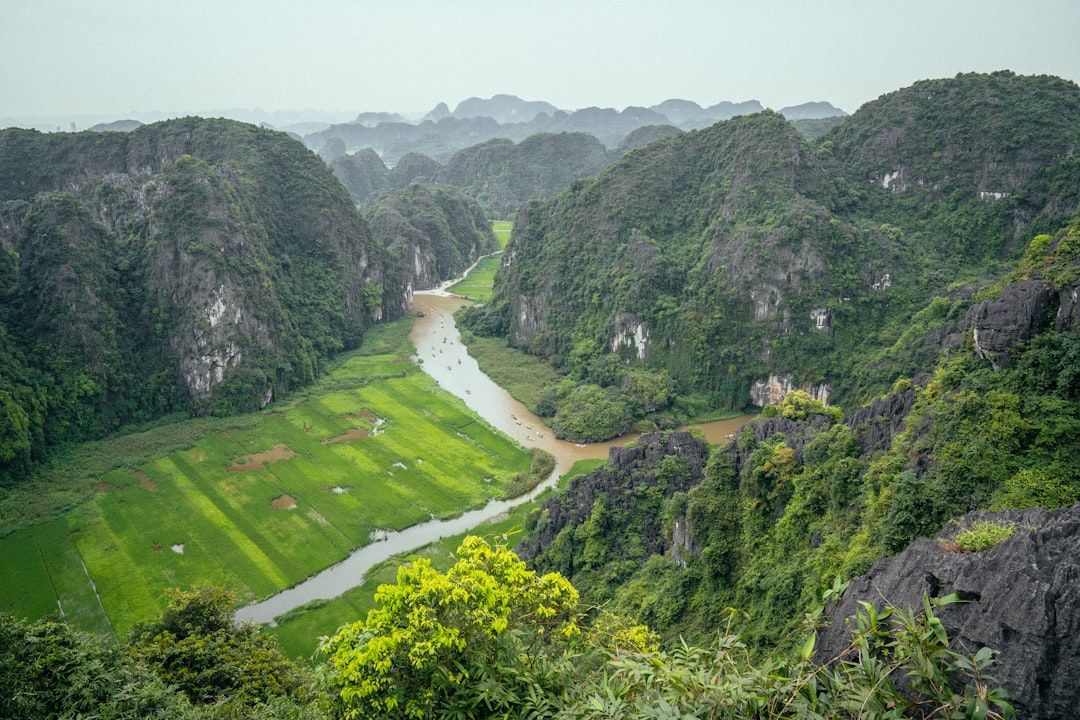
The alternative, which I would take, is Ninh Binh — the same limestone landscape rising out of rice paddies rather than sea, about two hours from Hanoi. You explore by rowing boat along the rivers at Trang An or Tam Coc, climb the steps at Hang Mua for the view over it all, and cycle between temples. It costs less, it is less crowded, and it is easier to reach.

Days six to nine: Hoi An
Fly to Da Nang and transfer south. Hoi An is a preserved trading port of lantern-lit merchant houses, and it is the place on this route where people slow down and stop moving.
Four nights sounds like a lot and rarely feels it. There is a good beach fifteen minutes by bicycle, the countryside is flat and made for cycling, the tailors will make clothes in a day or two, and the food is the best on the route — cao lau and white rose dumplings are local to here specifically.
Base yourself here for the My Son ruins, a Cham temple complex an hour inland, best visited early before the heat and the buses.
If you want the famous rail section, the Hue to Da Nang leg over the Hai Van Pass takes a few hours and is the one train journey worth building in.
Days ten to twelve: Ho Chi Minh City
Fly south. Saigon is faster, richer and more forward-looking than Hanoi, and the contrast between the two is one of the real pleasures of doing the whole country.
The War Remnants Museum is confronting and essential. The Cu Chi tunnels, a half day out of the city, are worth doing and are not for the claustrophobic. Beyond that, the city is best consumed at street level — the coffee culture alone justifies a couple of days.

Days thirteen and fourteen: the Mekong Delta
An overnight in the delta beats a day trip by a wide margin. The day tours from Saigon are rushed and heavily packaged; staying a night, ideally in a homestay near Can Tho, gets you to the floating markets early in the morning when they are actually operating rather than performing.
It is a fittingly slow ending — flat water, boats, fruit orchards — before flying out of Ho Chi Minh City.
Practicalities
Book an open-jaw flight, into Hanoi and out of Saigon or the reverse. Backtracking wastes a day of a two-week trip.
Domestic flights are frequent and inexpensive, and they are what makes this itinerary fit. Book them early for the best fares and treat them as the default for any leg over about six hours by road.
Check the visa position for your nationality before booking anything — Vietnam's rules on e-visas and exemptions have changed repeatedly, so confirm against the official source close to travel rather than relying on a blog, including this one.
On weather: the north and south have opposite seasons, so no two-week window is perfect everywhere. Central Vietnam's wet season in autumn brings real flooding, and Hoi An in particular floods. If your dates are fixed, check the season for the middle of the country and adjust the route rather than the dates.